Youbu Address
📍Address: No. 46, Dajieli, Youbu Town, Lanxi City, Jinhua City, Zhejiang Province, China
⌚️:Business hours: open all day
🎫: No tickets
🅿️: Nearby parking lots or street parking spaces (free)
Youbu History
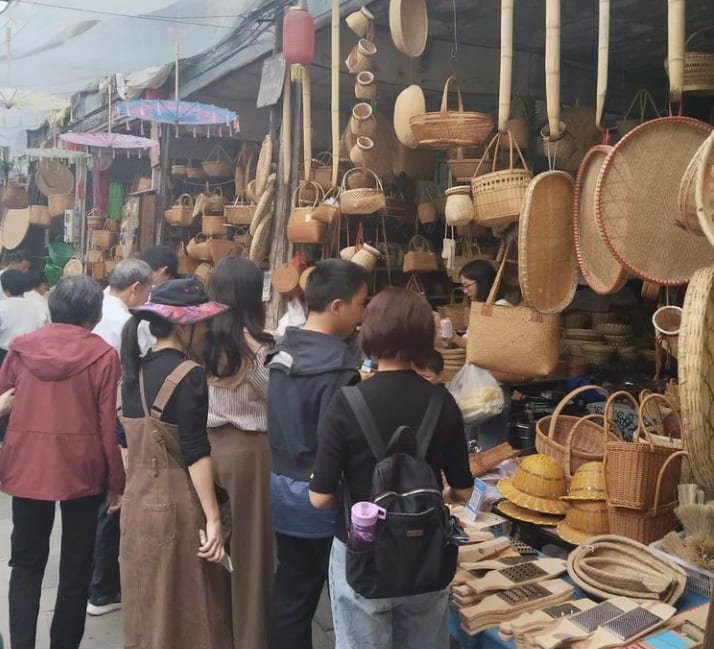
Youbu Ancient Town is located in the southwestern suburbs of Lanxi City, 18 kilometers from the city center. It borders the Qujiang River to the southeast, facing Wucheng District of Jinhua City across the river; to the southwest, it borders Longyou County and Shuiting Township of Lanxi City; and to the northwest, it borders Menghu Township and Chixi Township. Covering a total area of 63.5 square kilometers, it is an ancient town that blends natural beauty with historical culture.
Youbu was a commercial port downstream of Longyou County, hence the name “Youbu” (meaning “wandering port”). According to unearthed cultural relics and ancient site research, Youbu was a port.
Youbu Ancient Town in Lanxi City, Zhejiang Province, was founded during the Eastern Jin Dynasty, boasting a history of over 1600 years. As an important ancient transportation hub, it was once a bustling center of commerce and trade, and still retains a large number of Ming and Qing Dynasty buildings, each brick and tile carrying a profound historical and cultural heritage.
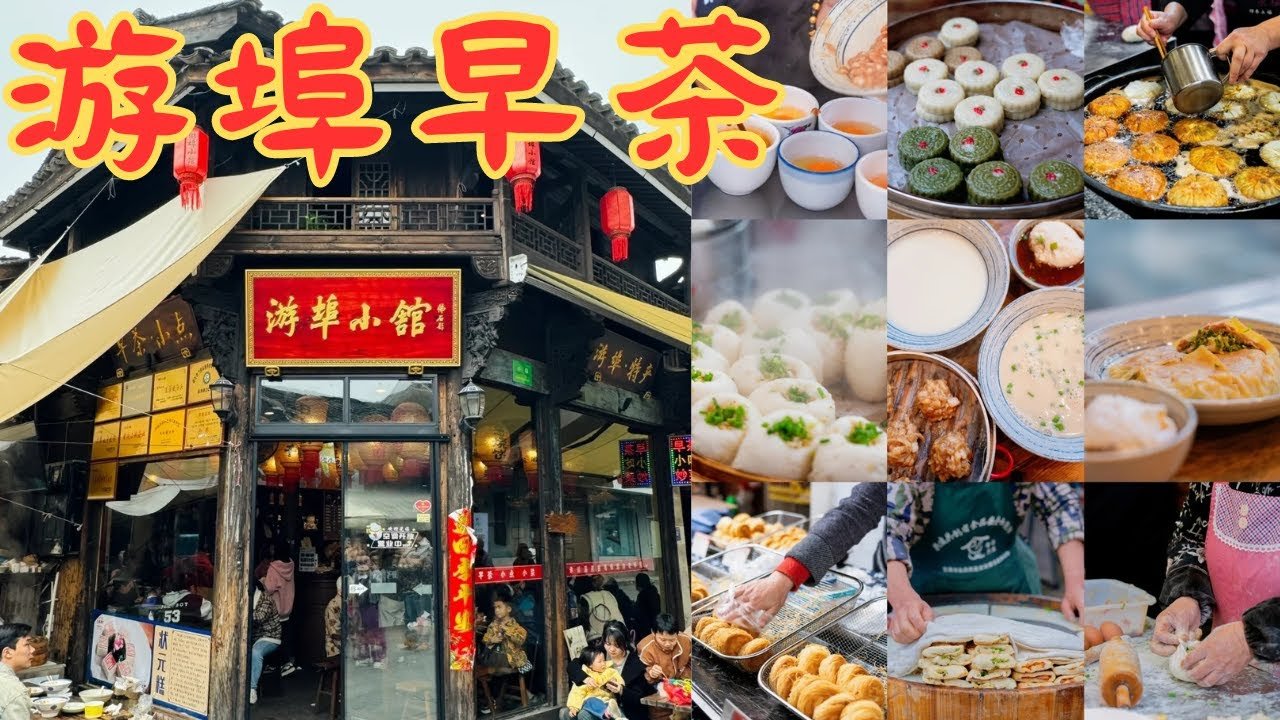
Youbu Ancient Town is one of the four major ancient towns in Zhejiang Province. Not only are its ancestral halls, temples, and memorial archways well-preserved, but the “Five Horses Returning to Their Stalls” bridge, spanning the Youbu River, is also a unique feature. However, the most captivating aspect is undoubtedly its renowned morning tea street.
Youbu Sauce Workshop
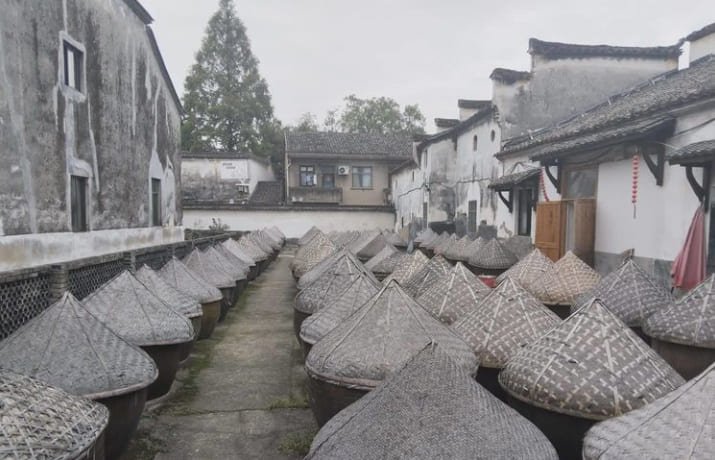
Youbu Sauce Workshop, located at No. 112 Jiefang Street, Youbu Town, was founded in 1904 (the 30th year of the Guangxu Emperor’s reign in the Qing Dynasty), boasting a history of over a century. Originally named “Fang Yufeng Sauce Garden,” it primarily dealt in wine and soy sauce, and obtained the “Official Sauce Garden” qualification in 1913.
Youbu Sauce Workshop’s soy sauce is renowned for its unique “Sanfu” (summer heat) sun-drying process, which gives it a mellow aroma and a bright red color, making it a local specialty.
Youbu Sauce Workshop’s soy sauce has also received numerous accolades throughout history. In 1939, its Sanfu soy sauce won a gold medal at the Panama-Pacific International Exposition, further enhancing its reputation. Furthermore, the traditional brewing techniques of Sanfu soy sauce have been listed as a Zhejiang Provincial Intangible Cultural Heritage, and the workshop itself has become a provincial-level intangible cultural heritage production and protection base.
Ancestral Home Of Guanxiu
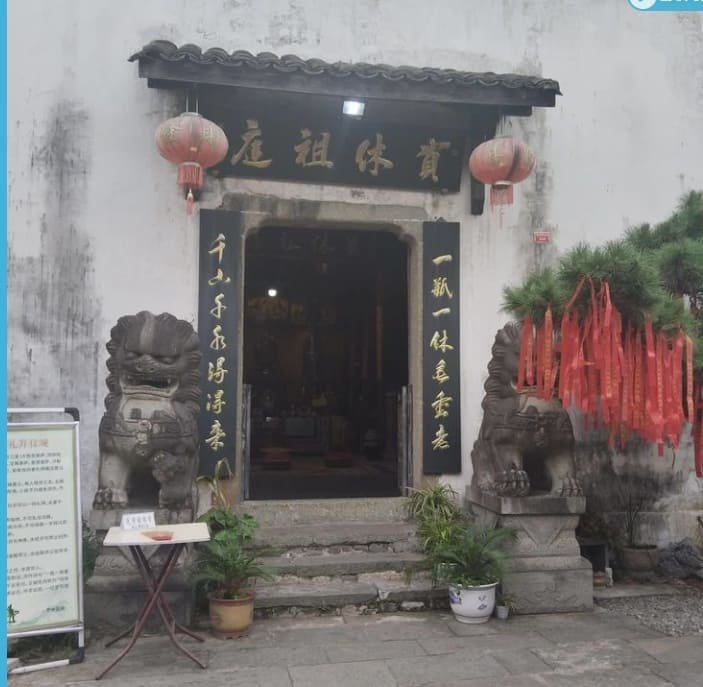
The Ancestral Home of Guanxiu, located in the center of Youbu Ancient Street, is the birthplace and place of ordination of Guanxiu, a famous Tang Dynasty poet-monk. It not only houses a statue of Guanxiu but also displays his life story and artistic works.
Guanxiu (832-912), whose secular surname was Jiang, given name Xiu, courtesy name Deyin, also known as Deyuan, and sobriquet Zen Master Yue, was a native of Youbu, Lanxi. Born into a declining gentry family, he became a monk at a young age. Exceptionally intelligent, he gained fame as a poet at fifteen, traveling extensively and exchanging poems with many contemporary poets. Guanxiu was not only a poet-monk but also a painter, compiling a poetry collection titled Xiyue Ji (later renamed Zen Moon Ji). Two of his poems were dedicated to two emperors: Qian Liu, King of Wuyue, and Wang Jian, Emperor Gaozu of the Former Shu.
Guanxiu became a monk at Anhe Temple in Lanxi at the age of seven. In the first year of the Qianning era of the Tang Dynasty (894), he met Qian Liu, King of Wuyue, and presented him with five poems. At the end of the first year of the Qianning era, Guanxiu visited Cheng Rui, the military governor of Jingnan, and resided at Longxing Temple. Later, he offended Cheng Rui and was exiled to Qianzhong for a time. In the third year of the Tianfu era (903), after Cheng Rui’s defeat and death, he went to Shu and presented a poem that read, “An old man with only a bottle and a bowl, I have traveled thousands of miles.” He was deeply respected by Wang Jian, the founding emperor of the Former Shu, who built the Longhua Zen Temple for him. In the second year of the Qianhua era of the Liang Dynasty (912), Guanxiu died at his residence at the age of eighty-one.
Camera Museum
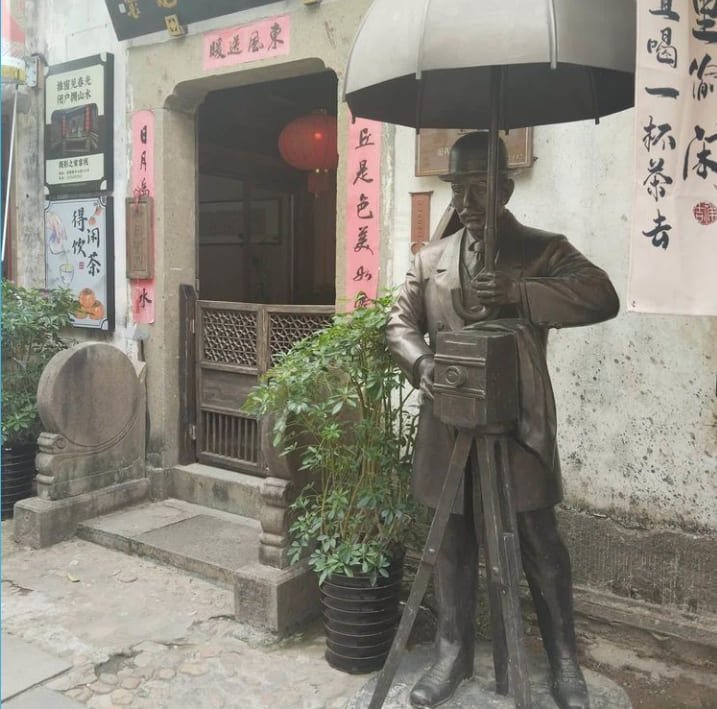
The Polaroid Antique Camera Museum, located on the old street of Youbu Ancient Town, was built over a year by Bu Zongyuan, chairman of Lanxi Polaroid Cultural Development Co., Ltd. The museum’s exhibition hall covers more than 800 square meters and houses over 400 items, divided into two main thematic sections: the China Pavilion and the World Pavilion.
The museum displays classic cameras from over 180 years since the invention of photography, including cameras from various periods and countries. The China Pavilion features cameras of special significance, such as the “Red Flag 20,” a camera produced under the care of Premier Li Xiannian and possessing important historical value. The World Pavilion showcases world-renowned cameras such as the Hasselblad 500EM, a 1968 Apollo moon landing commemorative edition.
The museum not only showcases the development of photographic technology but also provides visitors with a diverse experience through multimedia interactive methods and digital exhibition renovations.
Yellow Wax Stone Museum
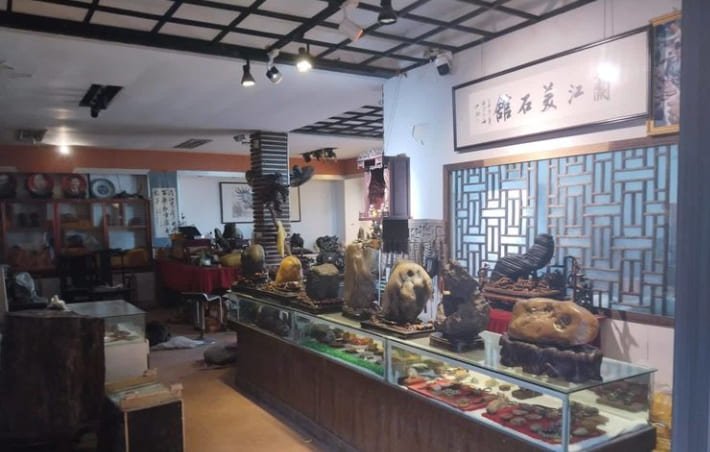
Located at No. 38 Zhongshan Street, Youbu Ancient Town, the Yellow Wax Stone Museum is one of the largest yellow wax stone museums in Lanxi City. Founded in the winter of 2015, the museum covers an area of several hundred square meters and displays hundreds of pieces of various yellow wax stone materials and ornamental stones, primarily pure natural yellow wax stones.
The yellow wax stones displayed in the museum are soft and delicate in texture, with a lustrous patina, vibrant colors, and an elegant and refined quality. These yellow wax stones possess the density and hardness of jadeite, as well as the warmth and purity of Hetian jade. The museum has also hosted several national stone exhibitions, attracting numerous collectors to appreciate and admire the stones.
Minced Meat Sesame Flatbread Wrapped With Fried Dough Sticks
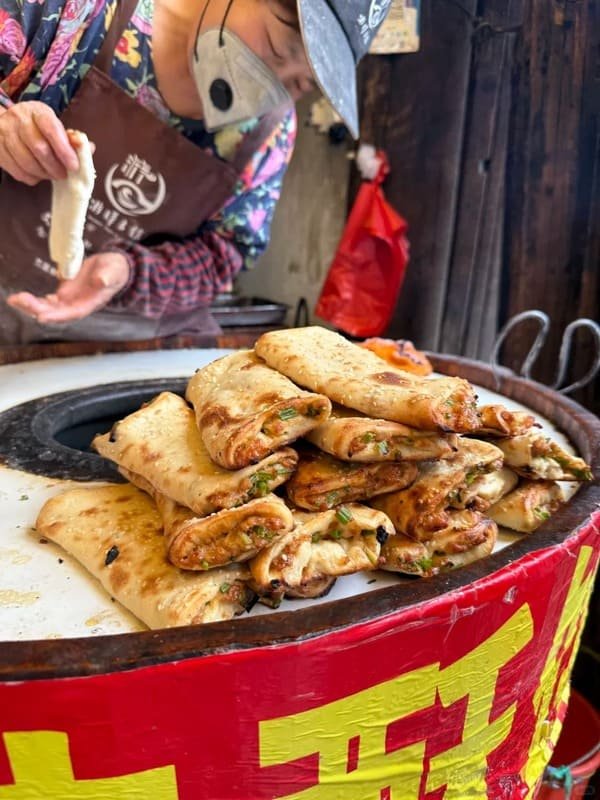
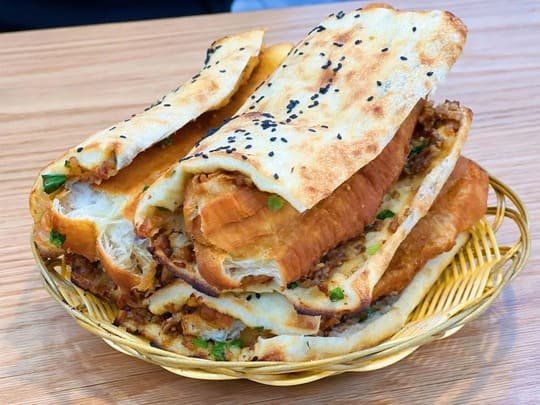
The dough for the flatbread is made using a sourdough starter. After 6 hours of natural fermentation, the dough develops a honeycomb-like structure, giving it a unique sour flavor and a fluffy texture. Minced meat is then added to the dough, and the flatbread is baked in a clay oven, resulting in a paper-crispy exterior and a soft, cloud-like interior. The baked meat becomes even more fragrant and delicious.
The dough for the fried dough sticks undergoes three proofing cycles before being deep-fried at 180°C, where it expands instantly. It is then quickly turned with bamboo chopsticks, creating a honeycomb structure that is crispy on the outside and hollow on the inside, resulting in an exceptionally crispy texture.
Combining these two ingredients, the crispy fried dough sticks and the crispy yet soft flatbread offer a delightful combination. Each bite provides the chewy texture of the flatbread, the crispiness of the fried dough stick, and the combined fluffiness of both, creating a rich and complex flavor experience.
Tofu And Glutinous Rice Balls
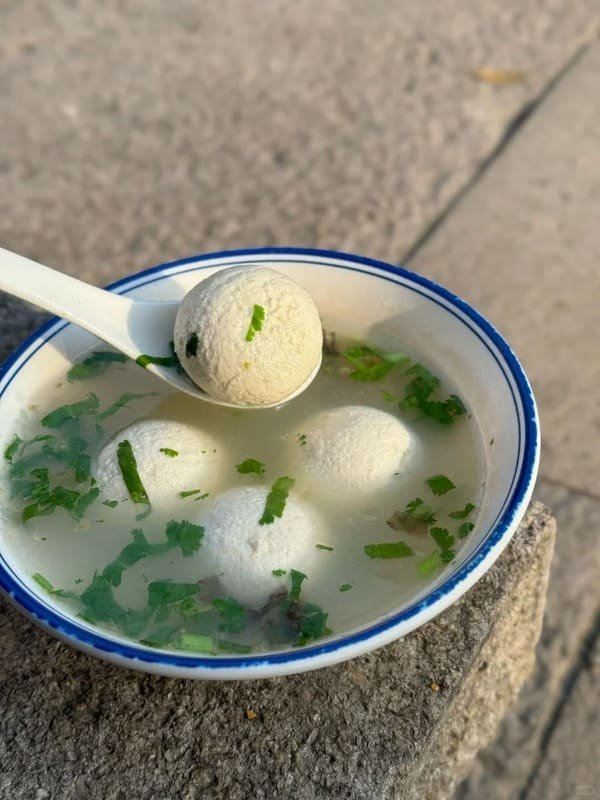
Chop the tofu, mix it with minced meat, shape it into a tofu ball, and drop it into a bowl filled with kudzu root powder. Shake it eight or nine times until the surface is covered with a frosty coating.
Boil it in hot water for three minutes, and you have a “tofu glutinous rice ball”. The kudzu root powder skin on the surface is thin and has good tear resistance. When you bite into it, you get a pool of salty and fresh flavor mixed with the aroma of beans and meat juice.
Paired with the shop’s homemade chili sauce with an acidity comparable to lemon, the taste is quite good.
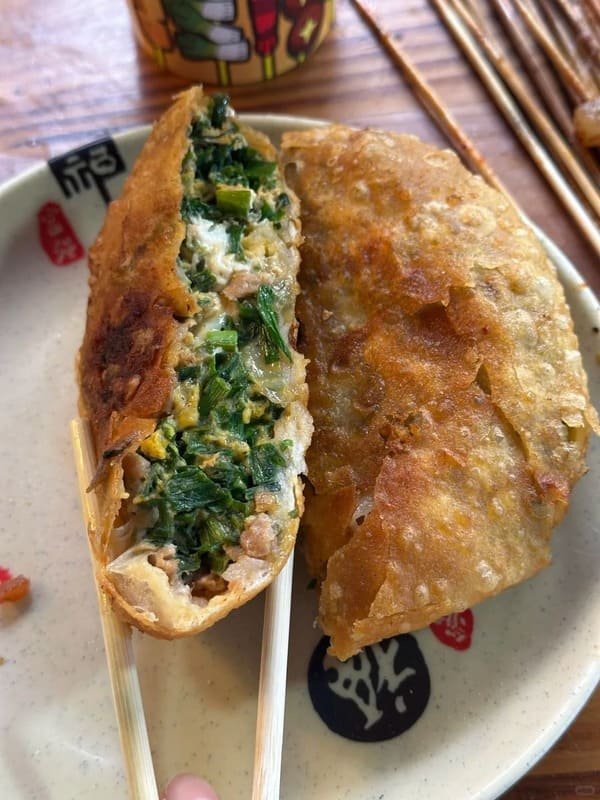
Chicken Egg Cake
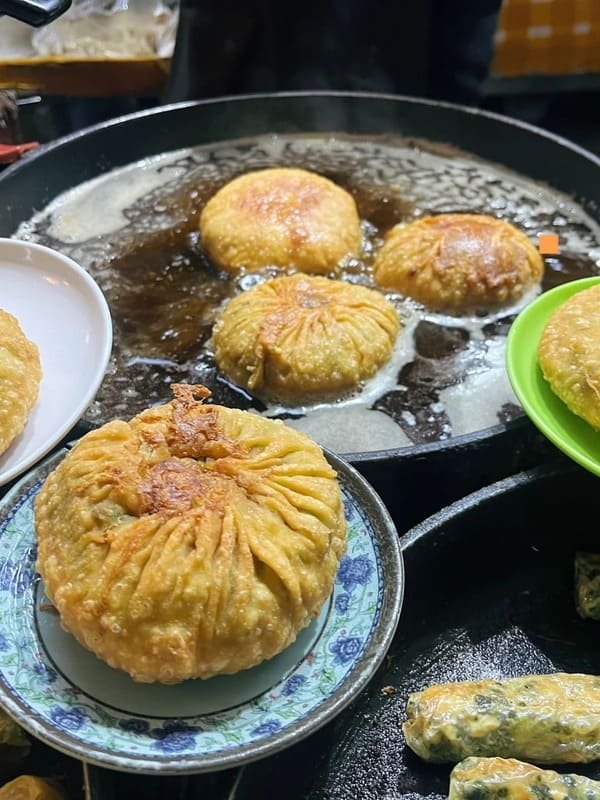
The Story of Chicken Egg Cake: Chicken egg cake is a traditional snack in Lanxi with a long history. A legend circulates in Lanxi about how Qiao Ji cleverly used chicken egg cake to cure Li Yu’s cold. The story goes that one New Year, Li Yu caught a cold and was bedridden. His family, following a folk remedy, made him a bowl of scallion soup. Li Yu, however, believed that scallions, garlic, and chives “disgusted his teeth, cheeks, and stomach,” and resolutely refused to eat them. At this time, Qiao Ji, based on Li Yu’s usual tastes, made egg-filled cakes and secretly added a lot of chopped scallions. The sleepy Li Yu ate it with increasing relish, finding it appetizing and clearing his nose, without even noticing the chopped scallions in the filling. Upon waking, the dispersing properties of the scallions had completely dispelled his cold, and he quickly recovered. From then on, Li Yu changed his view of scallions and wrote the line, “However, it is also acceptable to use them as a substitute for other ingredients.” And so, the Lanxi chicken egg cake was passed down.
The dough is rolled out until translucent, then a layer of minced meat is spread on top, followed by a generous handful of local Lanxi scallions. Thirty-eight pleats are made, but the opening is left unsealed. It’s flattened and pan-fried in oil. Seasoned egg mixture is poured in through the open end, and it’s briefly fried again. The delicious chicken egg cake is ready!
Once cooked, the chicken egg cake has a thin, translucent, and crispy golden-brown crust, exuding a unique, rich aroma. Inside, the meat filling, scallions, and egg mixture create a savory and delicious flavor.
When eating the chicken egg cake, serve it on a small plate. The thin crust bursts with the savory flavors of egg, meat, and scallions in one bite. Even if it’s hot, you can’t resist taking another bite. It’s fragrant and juicy. Another bite, and the aroma explodes in your mouth, bringing indescribable happiness.
Jinhua Crispy Cake
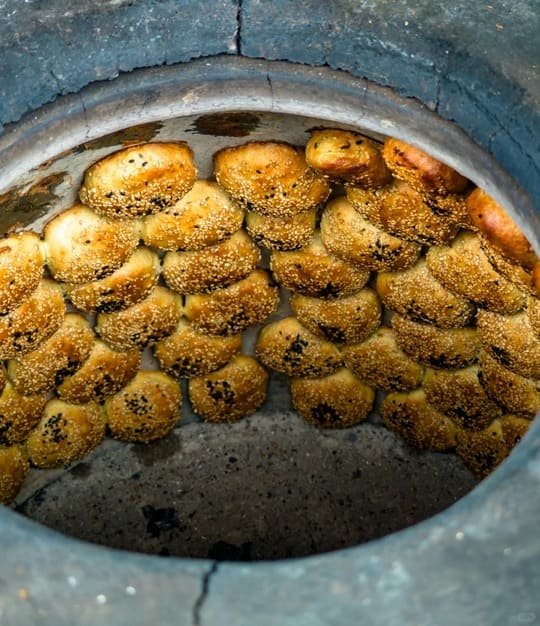
In the legendary land of Jinhua, Zhejiang, there is a delicacy that has withstood the test of time for over a thousand years, still exuding its captivating charm: Jinhua Crispy Cake. Jinhua Crispy Cake is not only a food, but also a cultural heritage, carrying the wisdom and emotions of the people of Jinhua.
I. Historical Memory
The stories surrounding Jinhua Crispy Cake are numerous and varied. Legend has it that during the Sui Dynasty, Cheng Yaojin, having fallen on hard times, arrived in Wucheng and made a living by opening a cake shop.
He made cakes with dried vegetable and pork filling. One day, he made too many cakes and left them by the stove. The next day, the pork fat from the cakes rendered out, making the crust oily, crispy, and delicious—a true crispy cake, beloved by the locals. Therefore, later generations called Cheng Yaojin the patriarch of Jinhua Crispy Cake.
Another legend says that when the Tang Dynasty poet Li Bai visited Wuzhou, he smelled an enticing aroma upon entering the city, prompting him to dismount and taste the crispy cakes. In ancient times, scholars traveling to take the imperial examinations often enjoyed this as provisions.
Jinhua shortbread is made with a filling of preserved mustard greens mixed with diced pork fat, seasoned with vegetable oil, maltose syrup, and salt, coated with baking soda and sesame seeds, and baked in a specially made oven. These legends add to the cultural significance of this small shortbread.
II. Production Steps
Mix diced pork fat with chopped preserved mustard greens and salt to make the filling. Mix flour with warm water, spread it out to cool, take a suitable amount, add an equal amount of yeast, and knead into a smooth dough.
Roll out the dough, fill it with the filling, and shape it into a pastry.
Baking the pastry. Jinhua shortbread, made through more than ten processes including soaking the dough, kneading, rubbing with flaky pastry, shaping the pastry, filling, brushing with maltose syrup, sprinkling with sesame seeds, and baking, is shaped like a crab shell. Each layer is as thin as paper, the crust is golden brown, covered with sesame seeds, the filling is oily but not greasy, fragrant and delicious, and exceptionally crispy.
Crispy, fragrant, fluffy, and crunchy, Jinhua crispy cakes are renowned for their crispness, melting in moisture – a unique characteristic of their texture.
Another feature is their excellent storage properties. Due to the long baking process, moisture is lost, making long-term storage possible. Even if they become damp, they can regain their crispness with a simple baking process.
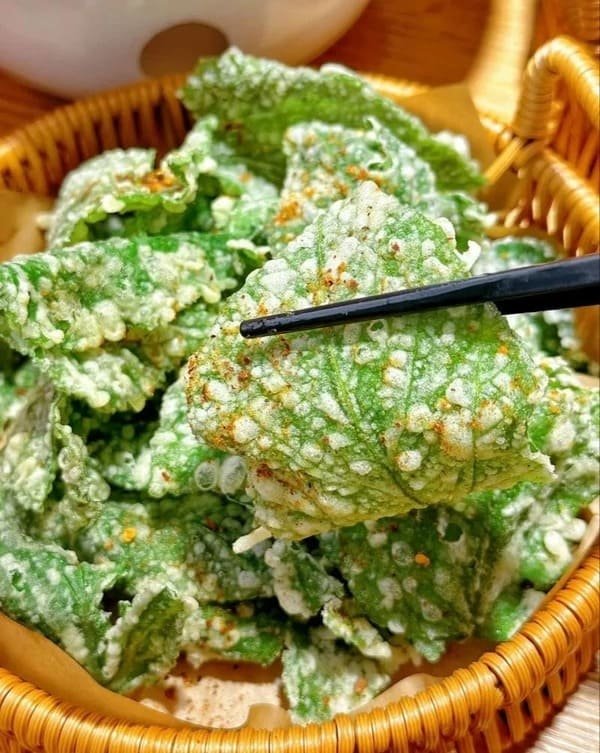
Deep-Fried Mulberry Leaves
Ingredients:
✔ Tender mulberry leaves: as needed (fresh, tender green leaves are recommended for better texture)
✔ Eggs: 1-2 (adjust according to the amount of mulberry leaves)
✔ Flour: 2 tablespoons to 50g (adjust according to the amount of mulberry leaves; you can also add some cornstarch for crispiness)
✔ Salt: as needed (for seasoning)
✔ Salad oil or other cooking oil: as needed (for frying the mulberry leaves)
Instructions:
Wash the tender mulberry leaves and drain well.
In a bowl, add flour, eggs, water, pepper, and salt to taste to make a batter, similar in consistency to yogurt.
Heat the oil in a pan to about 70% of its maximum temperature. Add the mulberry leaves, spreading them out as evenly as possible. Turn them frequently during frying to ensure even cooking.
When the mulberry leaves harden and turn golden brown on both sides, remove them from the pan and plate.
Mulberry leaves can dispel wind-heat, clear the lungs and moisten dryness, clear the liver and improve eyesight. They are often used for dry cough with little or yellow and sticky phlegm caused by lung heat or lung dryness damaging the lungs. They can also be used for coughs caused by wind-heat colds.
Tangyuan With A Tail-Shaped Shape
Ingredients
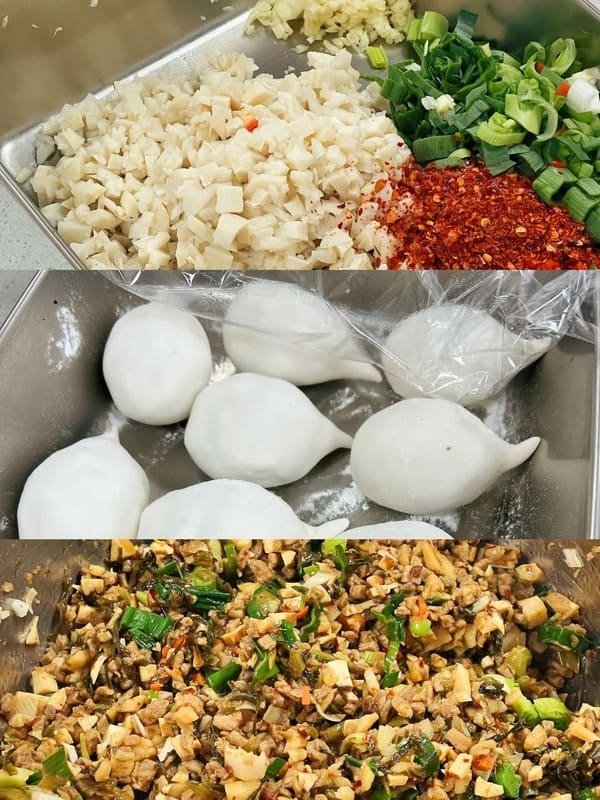
Tangyuan Skin: 500g glutinous rice flour, 375g water (makes about 27 tangyuan)
Filling: Pork (pork shoulder, pork belly, or leg meat) 500g, pickled mustard greens 150g, bamboo shoots 230g, dried tofu 120g
Instructions
- Dough: Mix glutinous rice flour and water. It will be a little dry and hard. Take one-tenth of the mixture, boil it in hot water until it floats, remove it, put it in cold water, and then put it back into the remaining glutinous rice flour. This will prevent it from cracking.
- Dice the pork (not the same as the filling for tangyuan). Dice the bamboo shoots and dried tofu.
- Heat more lard than you would for stir-frying in a pan. If using pork belly, sauté it first. 1. For the fatty part of the pork belly, add lard. Initially, the oil will become cloudy; fry until clear. Then add light soy sauce and dark soy sauce (approximately 25g light soy sauce and 10g dark soy sauce). Add pickled mustard greens and bamboo shoots and stir-fry until the moisture evaporates. Finally, add dried tofu and stir-fry evenly. Add chopped chili peppers and chili powder to taste. Before removing from heat, add MSG and a little sugar to taste, as the pickled mustard greens are already salty. After removing from heat, add chopped garlic chives and let cool.
- First, stir-fry the vegetables, let them cool, then make the dough. Make a portion, covering the rest with plastic wrap.
- To wrap the glutinous rice balls, first make a small well in the dough, then stuff it with the filling. Seal the opening with a tail shape.
- Bring water to a boil in a pot, add the glutinous rice balls, and add water again once they float to the surface.
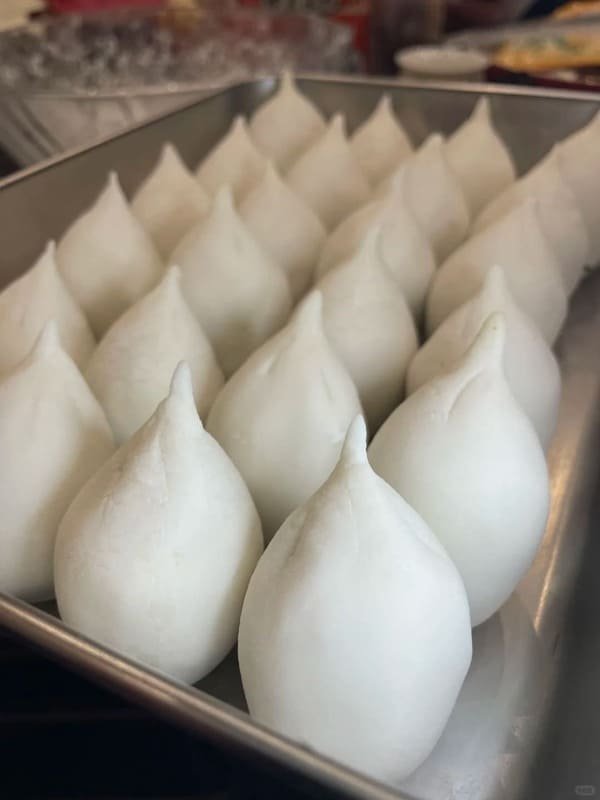
Meat Dumplings
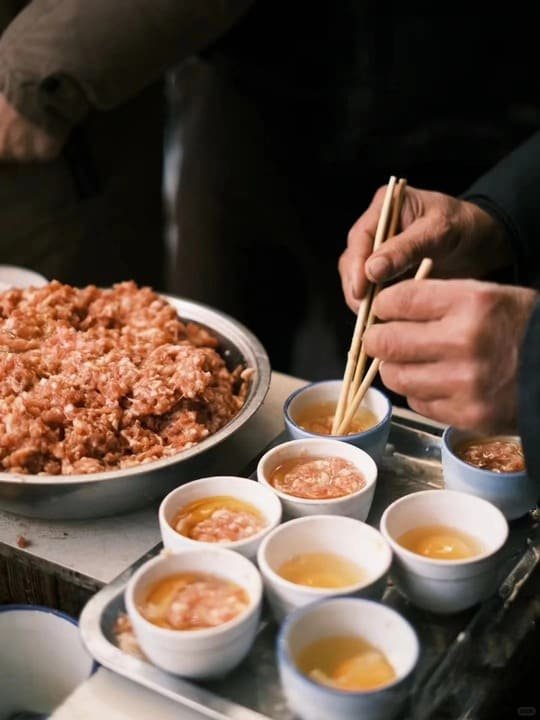
In the past, when a daughter returned home after marriage, not only would her mother make meat dumplings, but neighbors would also help. These dumplings embodied the mother’s hopes for her daughter, wishing her son-in-law would treat her well after marriage and that the couple would live a happy life. The new son-in-law would always eat two, symbolizing double happiness.
Meat is one of the main ingredients in meat dumplings. The seasoning of the meat filling shouldn’t be too strong, otherwise it will overpower the flavor of the egg yolk. Scallions, ginger, and salt are all essential; lacking any one of them will result in a poor flavor. The meat filling should be 20% fat and 80% lean, finely chopped. The key is fine chopping followed by coarse chopping; this allows you to taste the tender texture of the meat when you bite into it. If it’s minced, the flavor is significantly diminished.
The eggs must be fresh, free-range farm eggs. The yolks of free-range eggs are larger and firmer than those of factory-farmed eggs. To make minced meat dumplings, first crack an egg into a teacup. Then, use chopsticks to poke a small hole in the yolk. Stuff the seasoned, minced meat into the hole little by little, being careful not to break the yolk membrane. Repeat this process several times until the yolk is completely filled.
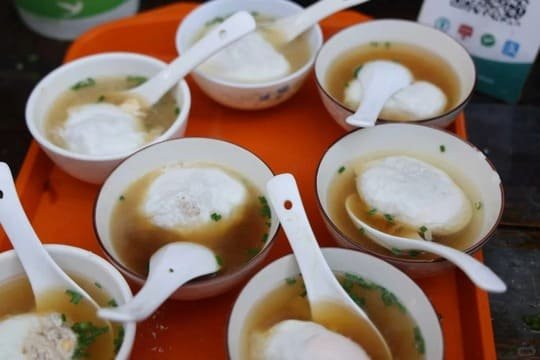
The dumplings are then boiled. Boiling requires precise timing. Bring the water to a boil, then simmer. Once the water stops bubbling, gently add the dumplings to the pot, one next to the other, without overlapping. Do not cover the pot while boiling. Simmer for about ten minutes until the dumplings float to the surface. Wait another ten to twelve minutes, then remove from the pot. Each step must be done carefully; otherwise, the egg membrane will break, and the flavor will seep into the broth, making the dumplings tasteless.
After removing the dumplings from the pot, place them in a bowl with lard and soy sauce. Pour the broth over them, sprinkle with chopped green onions, and serve piping hot. Pick one up and gently bite into it; the egg and meat blend perfectly, fresh, fragrant, tender, and warming to the stomach. Every bite brings a little happiness.
Roasted Milk Tea 🍵
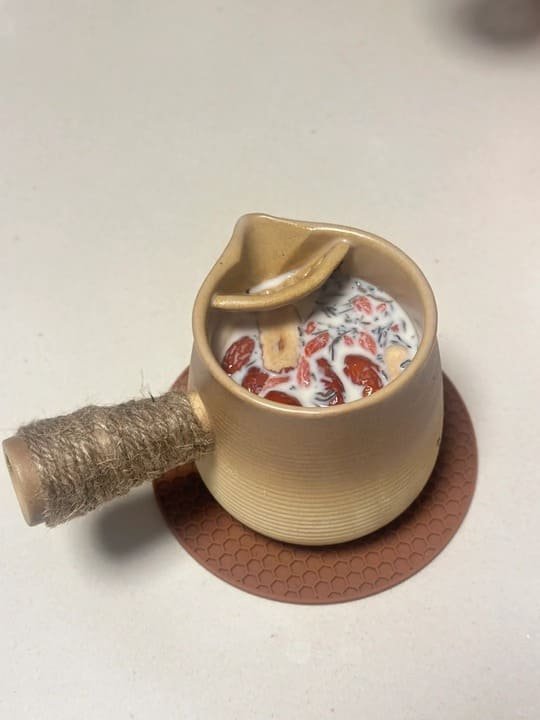
A cool breeze makes me crave a warm, comforting pot of roasted milk tea 🍵~
✨ A hearty gathering around a fire, all you need is a small earthenware pot!
Simmer tea leaves + zero-calorie sugar (or rock sugar ≤8g) over low heat → Once the tea aroma is released, pour in boiling water → Filter the tea leaves for a cleaner finish → Return to the pot, add milk, and simmer over low heat until steam rises from the edges (don’t boil!) → Let it sit for 30 seconds before drinking. A thin layer of milk skin will form on the surface, doubling the milky flavor!
📒 8 recipes to copy directly, calories listed below
1⃣ Original Potted Roasted Milk Tea|165 kcal
5g black tea + 200ml whole milk + 8g rock sugar. Classic milk skin version, rich tea flavor without being too sweet.
2⃣ Berry Light Sugar Roasted Milk | 140 kcal
5g green tea + 200ml skim milk + 10g erythritol + 2 strawberries + 5 blueberries. A light pink milk drink with a sweet and sour fruity aroma that perfectly balances the tea’s bitterness.
3⃣ Coconut Pandan Roasted Milk | 120 kcal
150ml unsweetened coconut milk + 50ml milk + 8g zero-calorie sugar + 1 pandan juice tablet + 5g shredded coconut. The aroma of coconut and pandan instantly evokes Southeast Asia.
4⃣ Longan and Red Date Roasted Milk | 180 kcal
3 red dates + 3 longans + 5g black tea + 200ml milk + 8g rock sugar. Natural fructose provides its own sweetness, making it safe even during menstruation.
5⃣ Matcha Red Bean Baked Milk | 155 kcal
3g unsweetened matcha powder + 200ml milk + 10g zero-calorie sugar + 20g low-sugar cooked red beans. The slightly bitter matcha and whole red beans create a super comforting taste.
6⃣ Orange Cinnamon Baked Milk | 160 kcal
1 slice of orange + 1 cinnamon stick + 5g black tea + 200ml milk + 8g erythritol. The orange juice and warm cinnamon aroma perfectly capture the wintery atmosphere.
7⃣ Walnut Oatmeal Baked Milk | 170 kcal
200ml unsweetened almond milk + 20g instant oatmeal + 5g black tea + 5g maple syrup + 5g chopped walnuts. Suitable for lactose intolerant drinkers, the oatmeal is delicious and chewy.
8⃣ Ginger and Jujube Light Sugar Baked Milk|175 kcal 2 slices of ginger + 2 jujubes + 5g black tea + 200ml milk + 5g brown sugar. The 5g brown sugar is just right to neutralize the spiciness of the ginger, a must-have for cold hands and feet.